When homeowners in Nixa weigh a new furnace, heat pump, or air conditioner, they usually focus on comfort first. A close second is cost, not just the sticker price but the return they can expect from the investment. The climate in Christian County pulls hard in both directions. July brings sticky afternoons that punish undersized air conditioners, while January mornings dip below freezing often enough to expose weak furnaces. If you treat a new system like a financial asset and evaluate it with the same discipline you would use on a kitchen remodel or a vehicle purchase, you get a clearer picture of what to buy, when to buy it, and how to run it so it actually pays you back.
This guide lays out a practical method for calculating HVAC ROI in Nixa, grounded in local weather, utility rates, typical home sizes, and the equipment choices a conscientious homeowner faces. It also touches on where a seasoned HVAC Contractor Nixa, MO can add value beyond installation. I’ll use round numbers and realistic ranges so you can adapt them to your home and quotes.
What “ROI” Means for Heating & Cooling
Return on investment for HVAC is the sum of yearly benefits, divided by the total cost to procure and keep the system running. Benefits show up in several places. The obvious one is lower utility bills from higher efficiency. There is also avoided repair cost when you replace a failing unit before it begins a death-by-a-thousand-service-calls. Add comfort gains that reduce space heaters and window units, time saved from fewer breakdowns, and, in some cases, higher resale value. Costs include the installed price, interest if you finance, maintenance contracts, filters, and any duct or electrical upgrades.
If you like a formula, a simple version looks like this:
Annual ROI percentage = (Annual savings and benefits − Annual incremental costs) / Total project cost × 100
Where savings typically come from reduced energy use. A more precise calculation will discount cash flows over time, but most homeowners get close enough with payback period and a simple percentage.
Local Inputs: Weather, Rates, and Baseline Homes
Nixa sits in a humid subtropical to continental transition zone. You will run both heating and cooling a lot, and shoulder seasons can be short. A few variables anchor the math:
- Weather pattern. Cooling degree days in the Springfield area commonly land around 1,400 to 1,600 per year. Heating degree days are roughly 4,000 to 4,400. That split tells you heating consumes more energy annually than cooling for most homes, so furnace or heat pump efficiency matters at least as much as SEER on the AC side. Utility rates. Residential electricity in southwest Missouri has been hovering around 12 to 14 cents per kWh in recent years. Natural gas has bounced but a fair planning figure is 1.00 to 1.50 dollars per therm, with winter peaks. Your bill will show your actual rates. Typical home size. A lot of Nixa homes built since the 1990s range from 1,600 to 2,600 square feet, often with modest insulation upgrades over time, original duct systems in the attic or crawl, and mixed window quality. Equipment baseline. Many houses still run 10 to 14 SEER split AC units from the early 2000s, paired with 80 percent AFUE furnaces. New minimum standards and market offerings now push 14.3 SEER2 and higher for cooling and 95 percent AFUE for gas furnaces, with variable speed and staging that helps comfort and energy use.
Those local markers shape the savings range you can expect.
A Straightforward ROI Method You Can Use
Start with the energy the old system likely uses, estimate what the new one will use, and price out the total project. Then layer in the non-energy variables. If that sounds wonky, here is how it looks in practice with round numbers that fit a lot of Nixa homes.
Let’s say your current system is a 3-ton, 12 SEER air conditioner and an 80 percent AFUE gas furnace. Your home is 2,000 square feet, fairly typical insulation, ducts in the attic. You’re considering two options: a mid-tier 16 SEER2 AC with a 95 percent two-stage furnace, or a high-tier 18 to 20 SEER2 heat pump with cold-weather performance, paired with a variable-speed air handler and a dual-fuel backup or high-efficiency furnace.
Cooling savings estimate. A 12 SEER unit needs 1 kW per 12,000 Btu per hour. A 16 SEER2 roughly equates to about 17 to 18 legacy SEER in seasonal performance terms, but to keep it conservative, treat 16 SEER2 as a 33 percent efficiency gain over a 12 SEER. If your seasonal cooling consumption today is 3,500 kWh, dropping consumption by a third saves about 1,150 kWh. At 0.13 per kWh, that is roughly 150 dollars per year.
Heating savings estimate with gas furnace. An 80 percent furnace wastes two tenths of the gas energy up the flue. A 95 percent furnace reduces waste to 5 percent. If you burn 700 therms a season today, you might drop to about 590 therms with the 95 percent unit, saving 110 therms. At 1.20 dollars per therm, that is about 130 dollars per year.
Combined, the mid-tier upgrade might save 280 dollars per year in raw energy.
Now consider the high-tier heat pump. Modern cold-climate heat pumps achieve seasonal heating performance factors that translate to coefficients of performance near 2.0 or better for much of our winter. That means you get two units of heat for every unit of electricity. When outdoor temperatures sink below the balance point, the system either leans on a gas furnace in a dual-fuel setup or electric resistance strips if configured that way, but in Nixa, a dual-fuel pairing usually pencils out better. Assume you shift 70 percent of your previous gas heating load to the heat pump at an average COP of 2.2, leaving 30 percent to a 95 percent furnace on the coldest days.
- Old gas usage: 700 therms. New gas usage at 30 percent of load with 95 percent furnace: about 210 therms. Savings on gas: 490 therms minus the efficiency delta, roughly 490 − (5 percent of 210) therms, but keeping it simple, your gas bill drops by around 500 to 600 dollars depending on rate fluctuations. Electricity added for heat pump: Convert the displaced gas heat to kWh. One therm is about 29.3 kWh of heat. If you displace 490 therms of heat input but the old furnace was 80 percent efficient, useful delivered heat was 392 therms. Replacing 392 therms of delivered heat with a heat pump at COP 2.2 takes about 392 × 29.3 / 2.2 ≈ 5,220 kWh. At 0.13 per kWh, that is about 680 dollars of electric spend for heating. Subtract the gas savings just noted. Depending on your specific rates, you may net modest savings or a small increase for heating energy, but you also gain comfort and more even temperatures. With current Missouri rates, dual fuel often nets slight savings versus gas-only, and larger savings against electric resistance or propane.
Cooling on the high-tier heat pump at 18 to 20 SEER2 can save a bit more than the mid-tier AC. If you take 3,500 kWh and cut it by 40 to 45 percent, savings run 1,400 to 1,575 kWh, or about 185 to 205 dollars per year at 0.13 per kWh.
Add it up conservatively. The mid-tier gas furnace plus 16 SEER2 AC saves 280 dollars a year on energy. The high-tier dual-fuel heat pump might save 300 to 500 dollars a year depending on your rates, thermostat strategy, and how deep winter gets. That is the energy line item.
Project costs. In Nixa, a fair installed price for a good 16 SEER2 AC and 95 percent two-stage furnace with proper sizing, new line set if needed, pad, and permits often lands between 10,000 and 14,000 dollars, depending on brand, ductwork adjustments, and electrical or gas line updates. High-tier variable capacity heat pumps with dual fuel and communicating controls can land between 16,000 and 22,000 dollars. Duct remediation, IAQ upgrades, and electrical panel changes add from hundreds to several thousand.
With those ranges, simple payback on the mid-tier package: 10,000 to 14,000 dollars divided by 280 dollars per year gives 36 to 50 years if you count only energy, which is not the full story. No one buys a new system purely for energy savings. You also avoid the rising repair costs of a 15-year-old unit. A realistic annualized benefit includes:
- Avoided repairs. Older systems in this area commonly rack up 300 to 800 dollars a year across emergency calls, capacitors, fan motors, igniters, and refrigerant leaks as they age. The year before a compressor or heat exchanger fails often brings two or three service visits. Warranty coverage. A new system under parts warranty and a labor warranty or maintenance plan stabilizes costs. Comfort and dehumidification. Variable speed equipment lowers indoor humidity in July and August, which lets you raise your setpoint by a degree or two without feeling sticky. That nudges kWh down and extends equipment life. Resale optics. Buyers walking through an open house in Nixa notice a new condenser and a modern furnace, especially in homes built before 2005. It shortens time on market and can lift sale price enough to recapture part of your spend.
If you value avoided repairs at just 400 dollars per year on average over the next 8 years, the mid-tier package’s annual benefit rises to around 680 dollars. Now your simple payback is 15 to 21 years. On the high-tier heat pump, energy savings plus avoided repairs might total 900 to 1,200 dollars per year, bringing payback into the 13 to 20 year range. These are rough but defensible numbers for our county.
Where ROI Hides: Ducts, Load, and Controls
The most reliable savings I see around Nixa do not come from bumping SEER by two points. They come from right-sizing, duct fixes, and control strategy. Three examples from recent jobs illustrate why.

A 1,900-square-foot ranch with a 3.5-ton AC short cycled and never kept humidity under 55 percent in July. We ran a Manual J load calculation and found the actual sensible load closer to 2.7 tons with decent attic insulation and window shading. We installed a 3-ton variable speed heat pump, sealed the return plenum leaks, and added a dedicated return in the master suite. Same rated tonnage as the old nameplate? No. Smaller. The bills dropped about 20 percent in summer, and the owner was finally comfortable at 75 degrees. That reduction came mostly from cycling and duct sealing, not just raw SEER.
A split-level with a 100,000 BTU 80 percent furnace blew past setpoints and overshot. We moved to a 60,000 BTU 95 percent two-stage furnace after a load calc. The gas use fell by around 15 percent year over year, but the bigger win was stable rooms and fewer calls for no-heat due to tripped limits. ROI looked modest on energy alone, but fewer emergency calls on icy weekends and a longer heat exchanger life are real money.
A 2,400-square-foot home on the south side had a decent 16 SEER AC but poor thermostat strategy. They ran everything in hold mode, one schedule all year. We installed communicating controls with humidity setpoints and a smart setback strategy that avoided aggressive recovery during peak heat. No hardware change to the condenser, but annual cooling energy down about 8 percent.
The thread through all three is that a conscientious HVAC Company Nixa, MO will start with measurement and math: load calculation, static pressure, duct leakage, and airflow at the registers. The software can be quick, but the site work determines results. Without it, ROI guesses lean optimistic.
How Financing Changes the Math
Many homeowners spread the cost with 0 percent promotional financing for 12 to 18 months or low-interest loans for 5 to 10 years. That changes ROI because you introduce interest expense but preserve cash and avoid passing on a good quote while inflation moves equipment prices up.
If you finance 12,000 dollars at 6.99 percent for 84 months, your monthly payment is about 180 dollars, total interest roughly 2,100 dollars. If your combined annual benefit is 700 dollars, you cover most of a year’s payments with savings and avoided repairs. The comfort and reliability benefits carry their own value too, especially if you work from home or have temperature-sensitive family members.
One caution: don’t let a low monthly payment seduce you into oversizing or overbuying. A variable capacity system sized to the load with healthy ducts outperforms a larger system with poor distribution, both in comfort and ROI.
Rebates, Incentives, and Local Factors
Utility rebates in our area come and go. Some years, you can claim a few hundred dollars for high-efficiency heat pumps, smart thermostats, or duct sealing. Federal tax credits under current law can cover up to 2,000 dollars for qualifying heat pumps and 600 dollars for furnaces and air conditioners that meet specified efficiency thresholds, subject to annual limits and your tax situation. Check current program rules before you bake them into ROI.
Local permitting costs are modest in Nixa, but homeowner association rules can affect placement and add minor costs for screening. If your existing electrical panel is at capacity, add a few hundred to a couple thousand for an upgrade when switching to a heat pump with electric auxiliary heat or a larger air handler.
Running Sensible Numbers for Your House
You can estimate your own HVAC ROI with the bill history you already have. Grab 12 months of gas and electric bills. Flag the high-cooling months from May through September, and the high-heating months from November through March. Subtract the shoulder months’ baseline usage to isolate HVAC energy roughly. If your usage varies with occupancy or a new appliance, adjust for it.
Next, ask an HVAC Contractor Nixa, M to run a Manual J load calculation and provide proposals for at least two equipment tiers. Insist on seeing the airflow and static pressure readings, and ask how they intend to solve any duct or return air constraints. Have them model a dual-fuel heat pump scenario if you have gas service. With that in hand, you can sketch an annual savings range using your own rates.
If you want a clean, back-of-envelope approach that fits most homes:
- Cooling savings percent when upgrading from 12 to 16 SEER2: 25 to 35 percent. Cooling savings percent when upgrading from 12 to 18 to 20 SEER2: 35 to 45 percent. Heating savings moving from 80 to 95 percent gas: 12 to 20 percent on gas usage. Heat pump heating cost versus gas at recent rates: roughly break even to slight savings in our climate with dual fuel, bigger savings if replacing electric resistance or propane.
Multiply those percentages by your actual kWh and therms.
Comfort and Resale Value, Quantified
Comfort is harder to price, but it influences ROI more than many expect. If your current system struggles to dehumidify in August, you likely overcool to feel dry. Dropping your indoor humidity from 58 to 50 percent can let you raise your cooling setpoint one or two degrees while feeling the same or better. Each degree of setback in cooling can trim about 3 percent from your AC usage. Over a season, that can stack another 40 to 70 dollars on savings, plus quieter operation and fewer allergy complaints.
On resale, I have watched appraisers and buyers in Nixa bump their internal valuation when they see a recent, efficient system with documented maintenance. You may not get dollar-for-dollar, but shaving days on market and getting a better first offer has real value if you plan to move within the next 5 to 8 years.
Maintenance and Operating Choices That Protect ROI
Even the best install loses ground without basic care. Filter changes matter more in our dusty, pollen-heavy season than the label suggests. A clogged filter raises static pressure, drives up blower energy, and shortens compressor and heat exchanger life.
- Use the right filter type. Many people in Nixa throw in a high-MERV, restrictive filter in a return box designed for a cheap fiberglass pad. That chokes airflow and melts ROI. If you want higher filtration, size the return area up or install a media cabinet with low pressure drop. Keep the outdoor coil clear. Cottonwood season fills the fins fast. A gentle rinse from the inside out reduces head pressure and amps, keeping SEER close to its rating. Seal obvious duct leaks. I often find return leaks at the panned joists in basements or the attic connections. A tub of mastic and foil tape can cut leakage enough to show up on your bill and in room-to-room balance. Set thermostats thoughtfully. Aggressive nightly setbacks in winter can trigger long recoveries in the morning, especially with heat pumps. A two or three degree swing is usually plenty.
The maintenance plan offered by a Heating and Air Conditioning in Nixa, MO provider is more than a courtesy call. If it includes coil cleaning, static checks, combustion analysis for furnaces, and a refrigerant performance check by subcooling and superheat, it is insurance for your ROI.
Common Pitfalls that Erode Returns
Bigger is not better. Oversized systems short-cycle, dehumidify poorly, and often fail sooner. Your neighbor’s 4-ton unit is not proof your house needs one too.
Ignoring ducts. If the technician never measures external static pressure or peeks into the plenums, you may be installing a Ferrari engine on a clogged exhaust. Static pressure above 0.8 inch water column on most residential air handlers signals trouble.
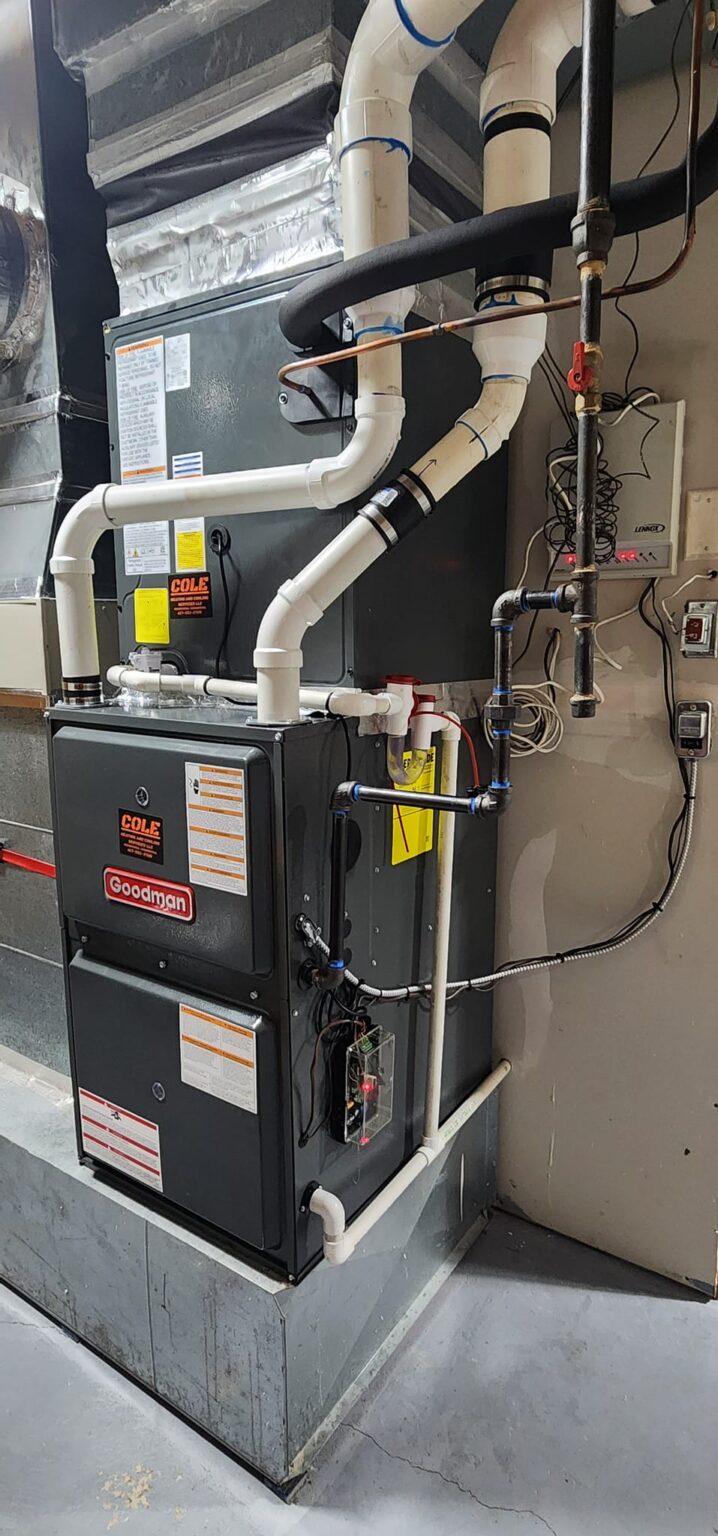
Chasing headline SEER without part-load control. Variable speed compressors and blowers earn their keep in Nixa’s long shoulder seasons by running longer at low speed, wringing out humidity, and saving energy when the load is modest. A single-stage 18 SEER is rare, but even a two-stage 16 SEER2 with proper setup can outperform a poorly applied high-SEER unit.
Skipping permits and load calcs. The fastest bid is not always the best bid. Permits, inspections, and documented sizing protect you when you sell and when you need warranty support.
A Worked Example with Realistic Ranges
Take a 2,200-square-foot home in Nixa with annual usage: 11,000 kWh electric, 800 therms gas. After subtracting baseline non-HVAC loads and water heating, estimate 3,800 kWh for cooling and 700 therms for space heating.
Option A: 16 SEER2 AC + 95 percent furnace, installed cost 12,500 dollars.
- Cooling savings: 30 percent of 3,800 kWh = 1,140 kWh × 0.13 dollars = 148 dollars. Heating savings: 15 percent of 700 therms = 105 therms × 1.25 dollars = 131 dollars. Avoided repairs: average 500 dollars per year over first 8 years. Maintenance contract: 180 dollars per year. Net annual benefit: 148 + 131 + 500 − 180 = 599 dollars. Simple payback: 12,500 / 599 ≈ 20.9 years. If you secure a 600 dollar utility rebate and a 600 dollar federal credit, net cost drops to 11,300. Payback improves to about 18.9 years.
Option B: 18 SEER2 variable heat pump + dual-fuel furnace, installed cost 18,500 dollars.
- Cooling savings: 42 percent of 3,800 kWh = 1,596 kWh × 0.13 = 207 dollars. Heating economics: displace 70 percent of gas heat. Gas savings around 490 therms × 1.25 = 613 dollars. Electric added for heat: about 5,200 kWh × 0.13 = 676 dollars. Net heating energy change around −63 dollars. With better thermostat strategy and defrost optimization, many households see a small positive, but we will keep it conservative. Avoided repairs: 500 dollars per year. Maintenance: 200 dollars per year. Net annual benefit: 207 − 63 + 500 − 200 = 444 dollars. Simple payback: 18,500 / 444 ≈ 41.7 years. With a 2,000 dollar tax credit and a 700 dollar utility rebate, net cost might be 15,800. Payback becomes 35.6 years.
Those numbers look underwhelming until you include non-energy benefits more fully and compare to doing nothing while the old system ages. If the existing system is 16 years old, the likelihood of a major failure in the next three years rises sharply. A compressor or heat exchanger replacement often runs 2,000 to 3,500 dollars. Two such events erase much of the difference between replacing now on your schedule and replacing under duress on the hottest or coldest day. Reliability and comfort are hard to quantify but not hard to feel.
There is another angle. Suppose the existing system is in rough shape and your summer bills already reflect degraded performance: 4,600 kWh for cooling, not 3,800. Suddenly the mid-tier upgrade’s cooling savings are closer to 180 dollars, and the high-tier heat pump’s advantage grows too. ROI rises as the old system’s efficiency and reliability fall.

When ROI Favors Repairing Over Replacing
Not every quote should end in a replacement. If your AC is only eight years old, has a minor refrigerant leak at a service valve, and your furnace is a 95 percent unit in good shape, spending 450 dollars on a proper fix and recharge is smarter than a new condenser. The repair-versus-replace decision tips toward replace when:
- Age crosses roughly 12 to 15 years. Major components show distress: compressor amperage is high, insulation is degraded, heat exchanger has visible cracks or fails a combustion test. R-22 systems require refrigerant that is no longer produced, making future leaks expensive and risky. Duct and comfort issues are severe, making a design correction part of the project.
A trustworthy Heating & Cooling partner will lay out both paths with costs and risks, not only the replacement.
How to Work With a Contractor for a Solid ROI
Selecting a https://blogfreely.net/diviuscxyk/air-conditioning-repair-in-nixa-mo-refrigerant-issues-101 contractor is where many ROI calculations live or die. Ask the company to show you their load calculation, not just say they did one. Ask for static pressure readings and recommended duct changes. In Nixa, a good HVAC Company Nixa, MO will know neighborhood construction patterns well enough to anticipate probable duct issues.
Schedule the install during a period when the technicians can take their time. A rushed change-out on a 102 degree day is a poor time to dial in airflow and refrigerant charge. Commissioning matters as much as the equipment brand. The best systems I see have the following in common: measured airflow set to target CFM per ton, line set properly sized and flushed or replaced, drains trapped and insulated, charge set by subcooling and superheat after at least 15 minutes of run time, and a homeowner who knows how to use the thermostat modes.
If you are comparing two or three quotes, normalize them. One proposal might include duct sealing and a media filter cabinet, the other might not. The least expensive bid rarely delivers the highest ROI if it leaves the distribution untouched.
The Bottom Line for Nixa Homeowners
HVAC ROI in Nixa, MO is not a single number. It is a range shaped by your home’s load, your ducts, your current utility rates, and the quality of the install. Energy savings alone, for many gas-heated homes, will not pay back a new system quickly. They do, however, defray the cost meaningfully, and when you stack in avoided repairs, better humidity control, quieter operation, and a stronger resale stance, the investment usually justifies itself over the system’s life.
The surest way to improve the math is not to chase the highest SEER in the brochure, but to commission a system that fits the house: right-sized equipment, corrected ducts, smart controls, and maintenance that keeps it all in spec. If you want a partner to run the numbers with you, look for an HVAC Contractor Nixa, M who leads with measurement and transparency, not just brand logos and a discount for signing today.
With that approach, your new system will feel good on a hot July afternoon and make sense on paper when you look at your bills next spring.